Tag Archive for: webdesign

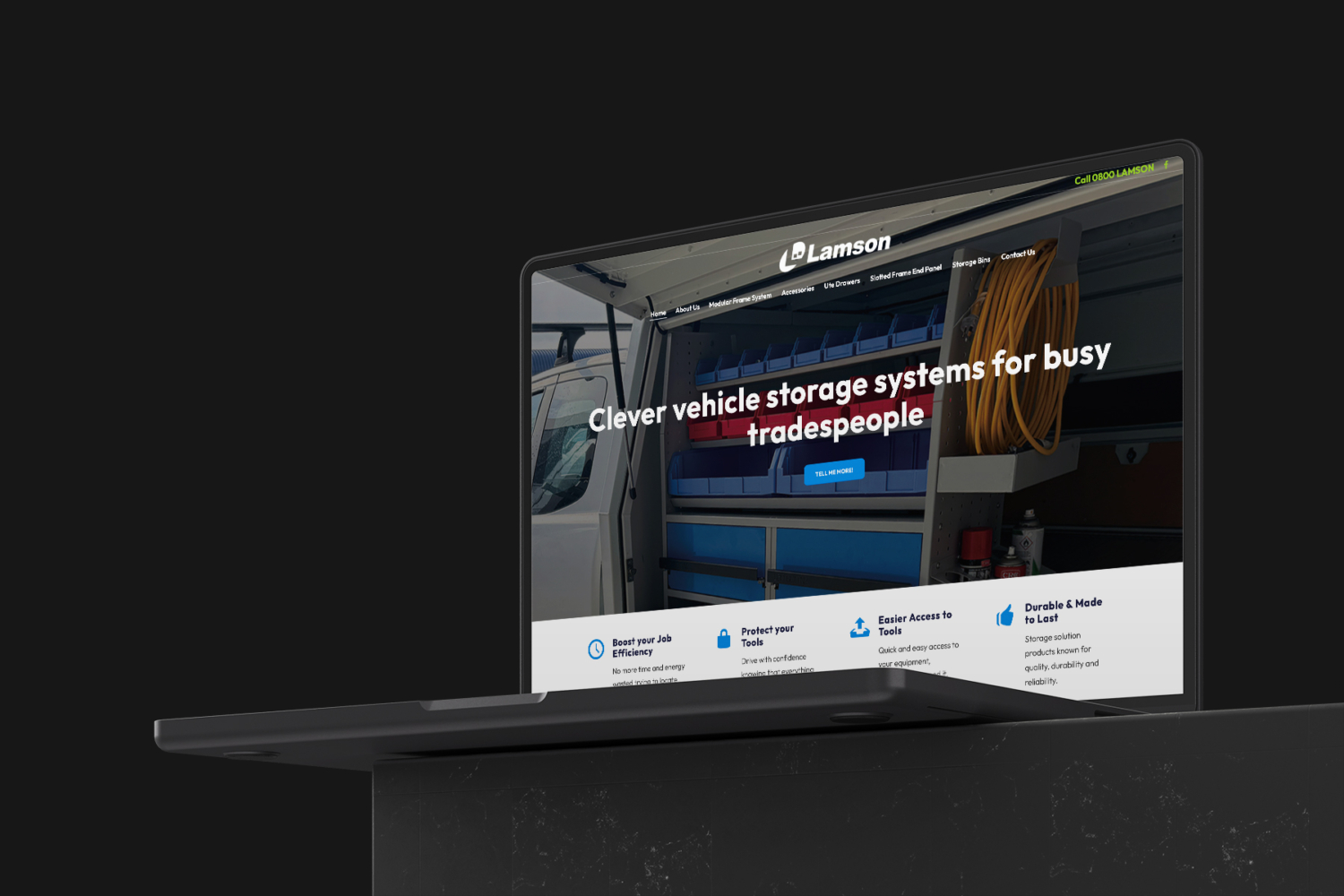
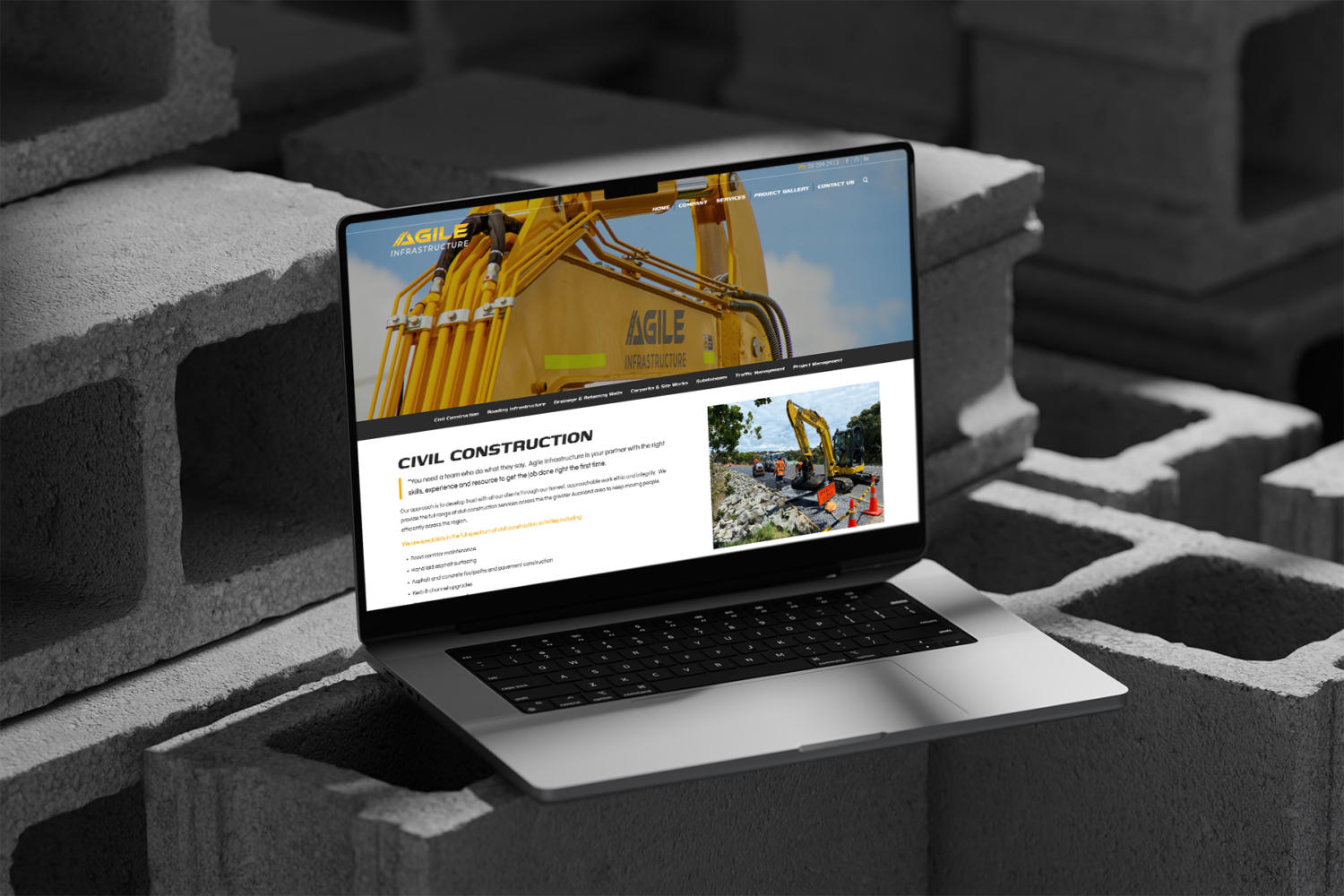
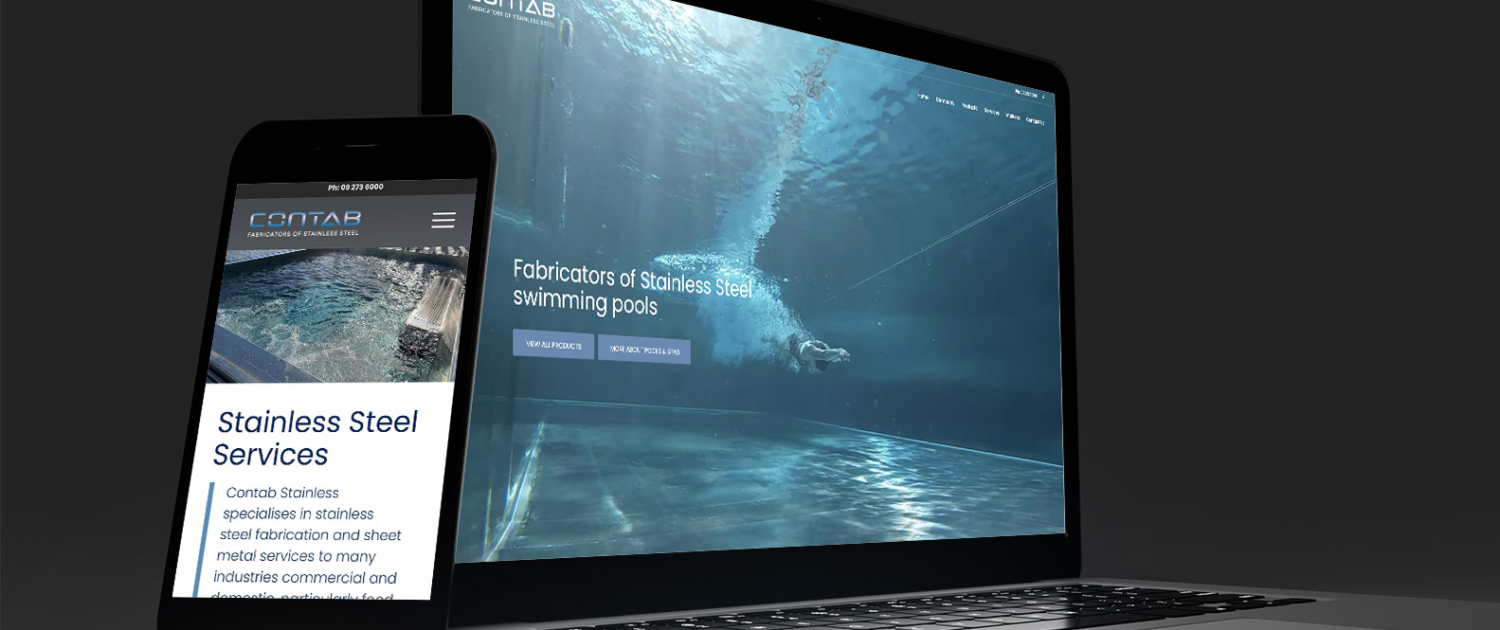
Agile Infrastructure website on Laptop on concrete blocks

A lot of tradies get a website done just to have something online, but not every website is actually helping the business behind it.

These days, when someone hears about your business, one of the first things they do is look you up. They want to see what you do, where you work, whether the quality looks good, and whether you feel like a business they can trust. If your website is too basic, too outdated, or too vague, it can let you down before you have even had a chance to speak to them.

That is why a tradie website needs to do more than just look tidy. It should clearly explain your services, show the quality of your work, and make it easy for the right people to get in touch.

At Merge Media, we work with service based businesses that need websites that feel professional, build trust, and help turn visits into real enquiries.

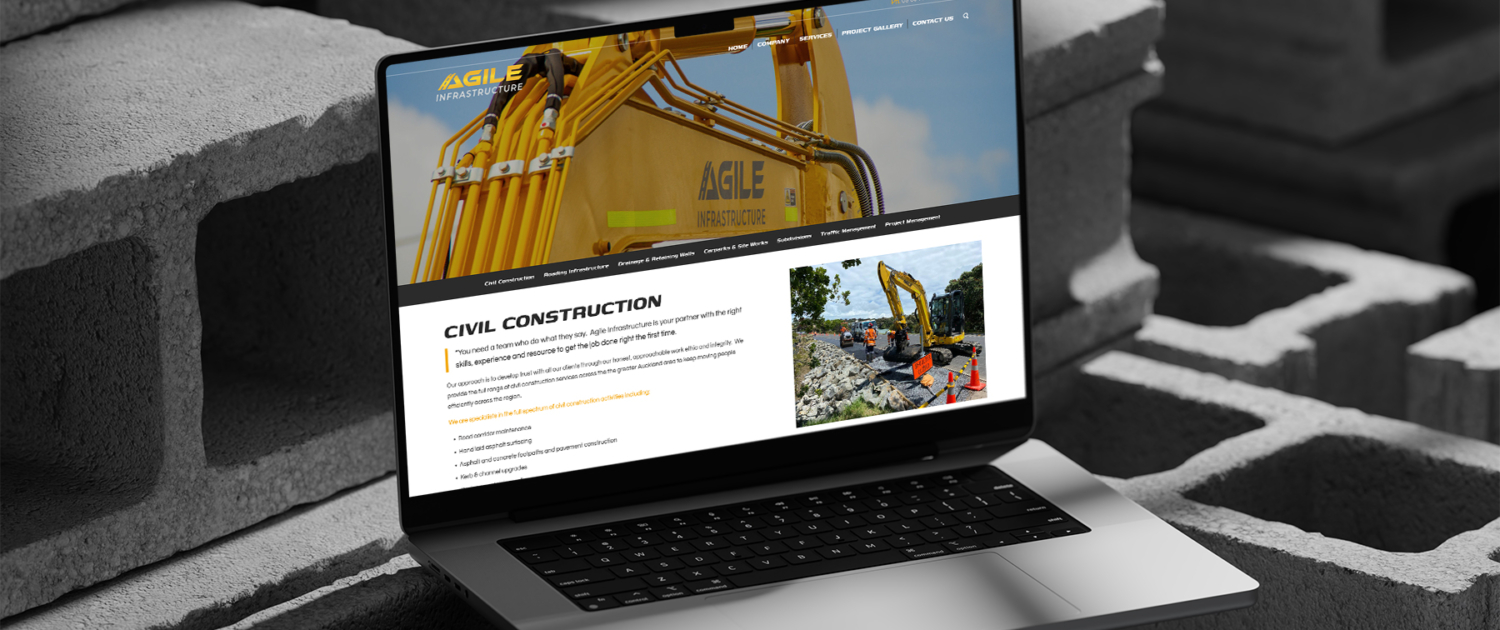
Agile Infrastructure website on Laptop on concrete blocks

1. Clear service information

One of the biggest things a tradie website should include is clear information about what you actually do. It sounds simple, but a lot of trade websites are still too general. They might say a business offers building, plumbing, electrical, landscaping, or roofing services, but they do not go into enough detail for people to quickly understand whether they are in the right place.

A stronger tradie website gives each main service room to breathe. That might mean separate service pages or at least clearly structured sections that explain the type of work you do, who it is for, and what people can expect. This is not just better for the person reading the website, it is also better for SEO because it gives Google more context around the services you offer.

If someone is searching for a tradie website design company, or looking for a builder, plumber, electrician, painter, or landscaper in their area, clear service content gives your website a much better chance of showing up and making sense straight away.

2. Trust building content

A tradie website also needs to build trust quickly. People are often comparing a few businesses at once, and they want to feel confident that the one they choose is experienced, professional, and easy to deal with.

That is where things like project photos, testimonials, years of experience, service areas, and a strong about section all come in. These are the parts that help turn a website from something basic into something that feels real and reliable.

A good trade business website should include things like:

  • real photos of your work
  • reviews or testimonials
  • clear contact details
  • service areas
  • a simple explanation of who you are and how you work

These details might seem small, but together they help create a much stronger first impression. They also help back up word of mouth referrals, because when someone hears about your business and looks you up, they are more likely to like what they see.

3. A structure that helps people and Google

A lot of tradie websites are missing the basics when it comes to structure. They might have one home page, one contact page, and not much else. That can be enough to exist online, but it is usually not enough to help the site rank well or support real business growth.

A stronger website for tradies should have a clear structure that makes it easy for people to move through the site and find what they need. It should also make it easier for Google to understand what the business does, where it works, and which services are most important.

That usually means including the right core pages, such as a home page, about page, contact page, and dedicated service pages. It also means having good headings, useful content, and local area wording naturally worked through the site. If you want your website to support SEO, these things matter just as much as the design.

The best tradie websites are not overloaded or complicated. They are simply clear, well planned, and built around what your customers are actually looking for.

Why Merge Media is a good fit for tradie websites

At Merge Media, we know tradie websites need to do more than just look good. They need to clearly explain what you do, show the quality of your work, and make it easy for people to trust you and get in touch. A lot of tradie businesses do great work, but their website does not always reflect that. Sometimes it is too basic, sometimes it is outdated, and sometimes it just does not explain enough.

We create tradie websites that are built around real businesses and real enquiries. That means thinking about your services, your service areas, the type of jobs you want more of, and how your customers are likely to search for you online. We can help with everything from the overall website design through to the wording, structure, images, SEO setup, and ongoing support.

Because we also offer graphic design and branding, we can make sure your website feels consistent with the rest of your business too. So whether you need a brand refresh, better service pages, stronger calls to action, or a more professional look overall, we can help bring it all together. We are also a small studio by choice, which means you deal directly with the people doing the work, making the whole process feel more straightforward, hands on, and personal.

Get in touch if your current website is not doing your business justice!


Contact us

If you run an industrial business in East Tamaki, your website needs to do more than just look tidy.

It needs to clearly explain your services, build trust quickly, and help the right people take the next step. For many engineering companies, fabricators, manufacturers, logistics businesses, warehouses, contractors, and suppliers, a website is often the first place people go after hearing about you.

That means your website design matters more than ever. A dated or overly basic website can make a strong business look behind the times, hard to understand, or harder to trust. On the other hand, a well planned industrial website can support your reputation, improve your visibility on Google, and help turn more visits into real enquiries.

At Merge Media, we create industrial website design in Auckland for businesses that need more than a generic online presence. We understand that industrial companies often need clear service pages, stronger structure, better messaging, and content that helps both people and search engines understand what they do.

Why East Tamaki businesses need more than just a good looking website

There is no shortage of industrial businesses in East Tamaki doing solid work. From engineering and fabrication through to logistics, manufacturing, warehousing, contractors, and suppliers, many of these companies have built strong reputations over time. But quite often, their websites have not kept up.

A modern website is not just about appearance. For industrial businesses, it needs to support how your customers actually buy. People may be comparing suppliers, checking capability, looking at your experience, or trying to understand whether you offer the exact service they need. If your website is too vague, too thin, or too outdated, they may move on before ever contacting you.

That is why website design in Auckland for industrial businesses needs a different approach. It should not just look polished. It should communicate clearly, support trust, and make it easier for your business to be found online.

What a strong industrial website needs to do

A lot of industrial websites try to say too much with too little. They squeeze multiple services onto one page, keep the wording too general, or rely on short paragraphs that do not actually explain much. That can make it harder for both customers and Google to understand what the business really does.

A strong industrial website should help your business:

  • clearly explain each service you offer
  • show the industries you work with
  • highlight your experience and credibility
  • support technical service pages
  • make it easy for people to enquire
  • improve your chances of showing up in Google search

This is where good website designers in Auckland can make a real difference. It is not just about layout or colours. It is about making sure the website structure, content, and messaging all work together to support enquiries and search visibility.

Why industrial website design helps with Google and AI search

If someone searches for a service you offer, your website needs to give Google enough information to understand that your business is relevant. That means having more than just a home page and a contact page. It means having useful service pages, location relevance, strong headings, and content that matches the kinds of questions people are actually asking.

For example, an engineering company in East Tamaki might want to be found for service based searches, location searches, or industry specific phrases. A generic website usually does not give you enough content to compete well for those terms. A better planned website gives you more opportunities to rank for industrial website design Auckland, website design Auckland, and service related searches connected to your business.

This also matters for AI search. Search tools are pulling answers from pages that are clear, specific, and useful. The more your website clearly explains what you do, who you help, and where you work, the better chance it has of being picked up as a useful source.

Why Merge Media is a strong fit for industrial businesses

At Merge Media, we know that industrial businesses need websites that are practical, professional, and built around real business goals. We understand that engineering, fabrication, logistics, manufacturing, warehousing, contractors, and suppliers often need more detailed pages and more thoughtful structure than a standard small business site.

We can help create websites that support:

  • detailed service information
  • technical service pages
  • stronger calls to action
  • capability statements
  • branding and graphic design
  • SEO friendly content
  • long term website support

Because we offer both web design and graphic design, we can also make sure everything feels joined up. That means your website, branding, print material, and supporting sales pieces all feel consistent and professional.

To learn more about our approach to web design for industrial companies in East Tamaki, take a look here: Web Design for Industrial Companies in East Tamaki

Get in touch if your industrial business needs a website that looks professional, explains your services clearly, and works harder for your business.


Contact us

Web Hosting Merge Media

If you are building a new website, one of the first questions that usually comes up is, how many pages do I actually need?

A lot of small businesses start off thinking they only need a home page, an about page, and a contact page. While that might technically get you online, it is usually not enough if you want your website to do any real heavy lifting.

The short answer? We would say 6 pages minimum.

That gives you enough room to explain who you are, what you do, build trust, and give Google a bit more to work with. And generally, the more useful and relevant pages you have, the better chance you have of ranking for more search terms.

That does not mean adding pages for the sake of it. It means building the right pages with the right purpose.

Web Hosting Merge Media

Why 6 pages is the bare minimum

Well-designed print sticks around. It doesn’t get deleted or lost in a browser tab. Business cards, flyers, and even a simple magnet can stay in someone’s life for months.

A great print piece acts like a quiet little reminder. Someone might not need your service the moment they receive it, but when they do, it’s already there. It’s much easier to grab a card from the fridge than to scroll through twenty websites hoping one feels right.

And let’s not forget the people who still prefer picking up the phone over Googling. Older generations, especially, often feel more comfortable with a card in hand than digging through websites. Having print materials means you’re not leaving that whole audience behind.

The 6 pages every small business website should have

1. Home page

Your home page is usually the first impression.

It should quickly explain what you do, who you help, and why someone should choose you. It should also guide people to the next step, whether that is reading more about your services, viewing your work, or getting in touch.

2. About page

People want to know who they are dealing with.

Your about page helps build trust by sharing a bit about your business, your experience, your values, and what makes you different. This is especially important for service based businesses where people are buying into your team as much as your service.

3. Services page

Your services page should clearly explain what you offer.

If you offer one main service, that page can go into detail about how it works, who it is for, and the benefits. If you offer several services, this page can act as a hub that links through to more detailed service pages.

4. Individual service page

This is where many small business websites fall short.

Instead of listing everything on one general services page, it is usually much better to give your main services their own pages. That gives you more room to explain each one properly and gives Google more specific content to rank.

For example, instead of one short paragraph that says you do websites, branding, and SEO, you would have separate pages for each.

5. Portfolio, projects, or testimonials page

People want proof.

A page that shows real projects, client feedback, case studies, or examples of your work helps people feel more confident about choosing you. It shows that you have done this before and that you know what you are doing.

6. Contact page

This one sounds obvious, but it still needs to be done properly.

Your contact page should make it easy for people to get in touch. Include your form, phone number, email address, location if relevant, and a simple call to action. Do not make people hunt around for how to contact you.

Is 6 pages enough?

It is enough to get started properly, yes.

But if you want your website to rank better over time, then more pages will usually help, as long as they are useful and relevant.

More pages can mean:

  • More chances to target specific services
  • More chances to target different locations
  • More blog content for Google to index
  • More answers to customer questions
  • More ways for people to land on your site

That is why a bigger website often performs better in search than a tiny one. It gives Google more content, more context, and more signals about what your business does.

What extra pages might a small business need?

Once you have your core 6 pages, the next step depends on your business.

You might benefit from pages like:

  • A page for each service you offer
  • A pricing page
  • A frequently asked questions page
  • A blog
  • Location pages
  • Industry specific pages
  • A gallery or project page
  • A resources page

These extra pages can make a huge difference, especially if you want to improve your visibility in Google and show up for more specific searches.

Need help planning the right pages for your website?

At Merge Media, we build websites that are designed to grow with your business, not hold it back. Whether you need a simple site to get started or a larger website with room to rank, we can help map out the right structure for your business from the start.

Lets chat about what pages your website really needs.


Contact us

Are blog posts still worth it in 2026, or are they just something else to add to the to do list?

With AI search, social media, and online competition all moving fast, it is easy to think blogging has had its day. A lot of businesses are focusing on quick content, shorter attention spans, and keeping up with the latest platform.

But blog posts are still one of the most useful tools you can have on your website. They help people find you, give your website more depth, and show both search engines and real humans that your business is active, relevant, and knows what it is talking about.

If your website has only a few pages and has not been updated in a while, blog posts can do a lot of heavy lifting behind the scenes.

1. They Help You Show Up for More of the Right Searches

Your main website pages can only say so much.

A blog gives you space to go after the questions your customers are actually typing into Google and AI tools. Things like pricing, common mistakes, how your process works, what to look for before choosing a provider, or the difference between one option and another.

That means you are not relying on one homepage or one service page to do all the work. Every blog post gives you another chance to be found by someone who is already looking for what you offer.

2. They Give AI More to Work With

Search is not just about keywords anymore.

People are asking full questions, and AI tools are looking for clear, useful content they can understand and pull from. A good blog post helps with that because it adds more context around your services, your industry, and the kinds of problems you solve.

The more helpful and relevant content your website has, the easier it is for search engines and AI tools to understand what your business is about and when to show it.

3. They Build Trust Before Someone Enquires

Most people do not land on a website and contact you straight away.

They click around. They read a bit. They check whether you sound like you know your stuff. They want to feel confident that you understand their problem and can actually help.

That is where blog posts do their job really well. They give you a chance to answer questions, explain things properly, and show your expertise in a way that feels helpful instead of pushy. A website with useful blog content often feels more trustworthy than one that has only a few basic pages and nothing new on it.

4. They Keep Your Website Looking Active

A website that never changes can start to feel a bit neglected.

Even if your business is busy behind the scenes, an untouched website can make it look like nothing has happened in months. Fresh blog content helps show that your business is still moving, still growing, and still paying attention.

That is good for search visibility, and it is good for first impressions too.

5. They Keep Working Long After You Hit Publish

A social media post might get seen for a day or two, then disappear.

A good blog post can keep bringing people to your website for months. It can keep showing up in search results, keep answering questions, and keep supporting your visibility without needing constant attention.

That is what makes blogging such a smart long term tool. You are building content on your own website that keeps working in the background.

Still Wondering If Blogging Is Worth It?

If your website feels a bit static, if you are not showing up for enough search terms, or if you want more ways for people to find and trust your business, blog posts are still absolutely worth it in 2026.

They are not just filler content. When done well, they support SEO, help with AI visibility, build credibility, and give your website more depth and purpose.

And if writing them yourself keeps slipping to the bottom of the list, that is where we can help!

We can help with blog topic ideas, writing, uploading, and scheduling too, so your website stays active without it becoming another job on your plate. If you would like a hand getting more useful content onto your site, Get in touch!


Contact us

If you’ve been asking how much a website costs in New Zealand, you’ve probably already noticed the answers are all over the place.

Some people will tell you a website costs a few hundred dollars. Others will say ten grand plus. Both can be true, depending on what kind of website you need, who is building it, and what you actually want it to do.

That is where a lot of businesses get caught out.

Because the real question is not just, how much does a website cost? It is, what kind of website are you paying for, and what results do you expect it to get?

If you want a basic online placeholder, your cost will be very different from a website designed to rank on Google, show up in AI search results, build trust, and bring in enquiries.

In New Zealand, a business website that is built properly and has a real chance of ranking usually starts from around $5,000 plus GST, and goes up from there depending on the size of the business, the number of pages, the structure, the content, and the level of strategy involved.

1. Why website pricing in New Zealand varies so much

There is no one size fits all answer to website design pricing in New Zealand because not all websites are the same.

A small local service business might only need a simple five to eight page website. A larger company with multiple services, locations, team members, FAQs, case studies, and SEO targets will need much more work behind the scenes.

The cost depends on things like:

  • How many pages the site needs
  • Whether content writing is included
  • How much SEO research is done
  • Whether the site is custom designed
  • How competitive your industry is
  • Whether you need enquiry forms, bookings, or other functionality
  • How much structure is needed for Google and AI search

So when someone says they can build you a cheap website, it is worth asking what is actually included. Because often the cheaper the website, the less strategy, structure, and search visibility you are getting.

2. What is included in the cost of a website?

A proper business website is about much more than just choosing colours and adding a few photos.

When you are looking at website cost in New Zealand, you are really paying for a mix of planning, design, structure, content, setup, and technical work.

A good website project often includes:

Strategy and planning

Before anything is designed, the site should be planned properly. This includes understanding your business, your services, your ideal customers, and what pages are needed.

This step matters because a website should not just look good. It should guide people to take action.

Website design

This is the visual side of the project, the look, feel, layout, imagery, headings, and overall user experience.

A well designed site should reflect your brand, feel professional, and make it easy for people to find what they need.

Website content

Content is a huge part of website pricing, and often one of the most underestimated.

Good website content is not just filling space. It needs to clearly explain what you do, speak to your customer, and include the right keywords for Google search and AI search without sounding robotic.

SEO setup

If you want your website to rank, SEO needs to be part of the build from the start.

That can include:

  • Keyword research
  • Page structure
  • Heading hierarchy
  • Title tags and meta descriptions
  • Image naming and optimisation
  • Internal linking
  • URL structure
  • Location targeting
  • FAQ content for AI search

This is one of the biggest differences between a cheap website and a website built to perform.

Technical setup

There is also all the behind the scenes setup, like mobile responsiveness, contact forms, speed basics, analytics, security, and launch support.

All of that takes time, and it matters.

3. What does a cheap website usually mean?

There is nothing wrong with having a smaller budget, especially when you are starting out. But it is important to understand what a low cost website usually means.

A website at the cheaper end often involves:

  • A basic template
  • Very limited pages
  • Little or no SEO research
  • No real content strategy
  • Generic wording
  • Minimal customisation
  • Little thought given to ranking

That type of website might be enough if you just want an online presence. But if your goal is to be found by the right people and generate quality leads, it can end up costing you more in the long run.

A cheap website can look okay on the surface, but if no one finds it, or if it does not build trust, then it is not doing much for your business.

4. What does a website that can rank usually cost?

If your goal is to have a website that can actually compete in search results, then the pricing is different.

For most New Zealand businesses, a website that is built with SEO in mind, has the right structure, enough content, and a good chance of ranking will usually start at around $5,000 plus GST.

That is a realistic starting point for a small to medium business that wants more than just an online brochure.

From there, pricing can go up depending on:

  • The number of services
  • Whether you need location pages
  • How much competition there is in your industry
  • Whether content writing is included
  • Whether blogs or resource pages are needed
  • How much custom design is involved
  • Whether you need ongoing SEO support

For a larger business, a more established company, or a business in a competitive industry, the cost can be significantly higher.

5. Why the size of your business matters

One of the biggest factors in website pricing in New Zealand is the size and complexity of the business itself.

A sole trader or small local business may only need a homepage, about page, services page, contact page, and a couple of supporting pages.

A bigger business might need:

  • Multiple service pages
  • Team pages
  • Case studies
  • Project galleries
  • Industry specific landing pages
  • FAQ sections
  • Blog content
  • Lead generation pages
  • Location based SEO pages

The more layers your business has, the more your website needs to do. And the more your website needs to do, the more planning, writing, and build time is involved.

6. A website is an investment, not just a cost

This is the part that often gets missed.

A website is not just something to tick off the list. It is often the first place people go when they hear about your business. It is where they decide whether you look trustworthy, professional, and worth contacting.

A well built website can:

  • Bring in new enquiries
  • Help you rank on Google
  • Support AI search visibility
  • Answer customer questions
  • Save you time
  • Build trust before someone even picks up the phone

So yes, the upfront cost can feel like a lot. But if the website helps bring in quality leads and new business, it starts paying for itself.

7. What should you ask before getting a website quote?

If you are comparing website quotes in New Zealand, ask a few key questions:

Does this price include content writing?

A lot of people assume it does, but often it does not.

Is SEO included?

And if so, what level of SEO? Basic plugin setup is not the same as real keyword and page structure planning.

How many pages are included?

A five page website and a fifteen page website are very different projects.

Is the site designed to rank?

This is the big one. If ranking on Google matters to you, that needs to be part of the plan from day one.

What happens after launch?

Ask about hosting, maintenance, updates, and support.

So, how much does a website cost in New Zealand?

The honest answer is, it depends.

It depends on the size of your business, what your website needs to do, how many pages you need, whether you want content writing and SEO included, and how serious you are about ranking.

If you only need a very simple website, your cost may be lower.

But if you want a professional business website that is built properly, reflects your brand, and has a real chance of ranking on Google and being picked up in AI search, then around $5,000 plus GST and upward is a more realistic starting point.

That does not mean every business needs a huge site. It just means that a website built to perform takes more thinking, more strategy, and more work than many people realise.

In the end, the best website is not the cheapest one. It is the one that does its job.

And if its job is to bring in leads, support your credibility, and help people find you online, then it is worth building it properly from the start.

Book a Free Chat with us today and let’s talk about building a website that delivers real results.


Contact us

colour swatches up against website

When you think about your brand, what comes to mind first? Your logo? Your tagline? Maybe your website?

One thing that often gets overlooked is colour. But the colours you choose are doing a lot of heavy lifting behind the scenes. They shape how people feel when they interact with your business. They help tell your story, often before a single word is read.

Whether you realise it or not, your brand colours are setting a tone. The question is, are they sending the right message?

1. Colour Triggers Emotion Instantly

Before someone even reads your headline, their brain is already responding to your colours. Bright yellow might feel energetic or tradie-like. Navy feels reliable and professional. Black suggests luxury and exclusivity. Soft pastels can feel calming and friendly.

The way people feel about your colours impacts how they feel about your brand. That is why colour choice should never be random or based on personal preference alone.

Your brand isn’t just about what you like. It’s about what resonates with your ideal customer.

2. Consistency Builds Recognition and Trust

You know when you see that red and yellow combo and immediately think of McDonald’s? Or when you spot the blue and white of Facebook from a mile away?

That’s the power of consistent colour use.

When your brand colours are used consistently across your website, signage, social media, print materials, and uniforms, your business becomes easier to recognise. People begin to associate those colours with your name. Over time, it builds familiarity and trust.

But if you keep switching between shades or trying new looks every time you design something, it sends mixed messages. It can start to look messy or unprofessional, and that breaks trust before you even realise it.

3. Colours Should Reflect Who You Are

Your brand colours should reflect your personality, values, and the type of experience your clients can expect. For example, if you’re a high-end construction company that prides itself on precision and professionalism, hot pink probably isn’t the right fit.

Are you warm and approachable? Cool and clinical? Youthful and playful? Calm and natural?

Once you understand your brand personality and audience, you can choose colours that match. It’s not about guessing. It’s about creating a visual identity that feels like you and speaks directly to the people you want to attract.

4. It’s Not Too Late to Reassess

If you chose your brand colours years ago and they no longer reflect your business, it might be time to evolve.

A colour refresh doesn’t mean throwing everything out. Sometimes, it’s just a matter of adjusting the tones, refining the palette, or being more intentional about how colours are used.

At Merge Media, we can help you explore how your colours are working, what they’re saying about you, and how they can better align with your current brand strategy.

Ready to Refresh Your Brand Colours?

If your brand colours no longer feel like a good fit or you’re just not sure what message they’re sending, we’re here to help. Let’s sit down and take a look at what your colours are really saying — and whether they’re working for or against your brand.

No pressure. No design jargon. Just a relaxed conversation over coffee or a quick online catch-up.

Book a Free Chat with us today and let’s make your brand feel more like you.


Contact us

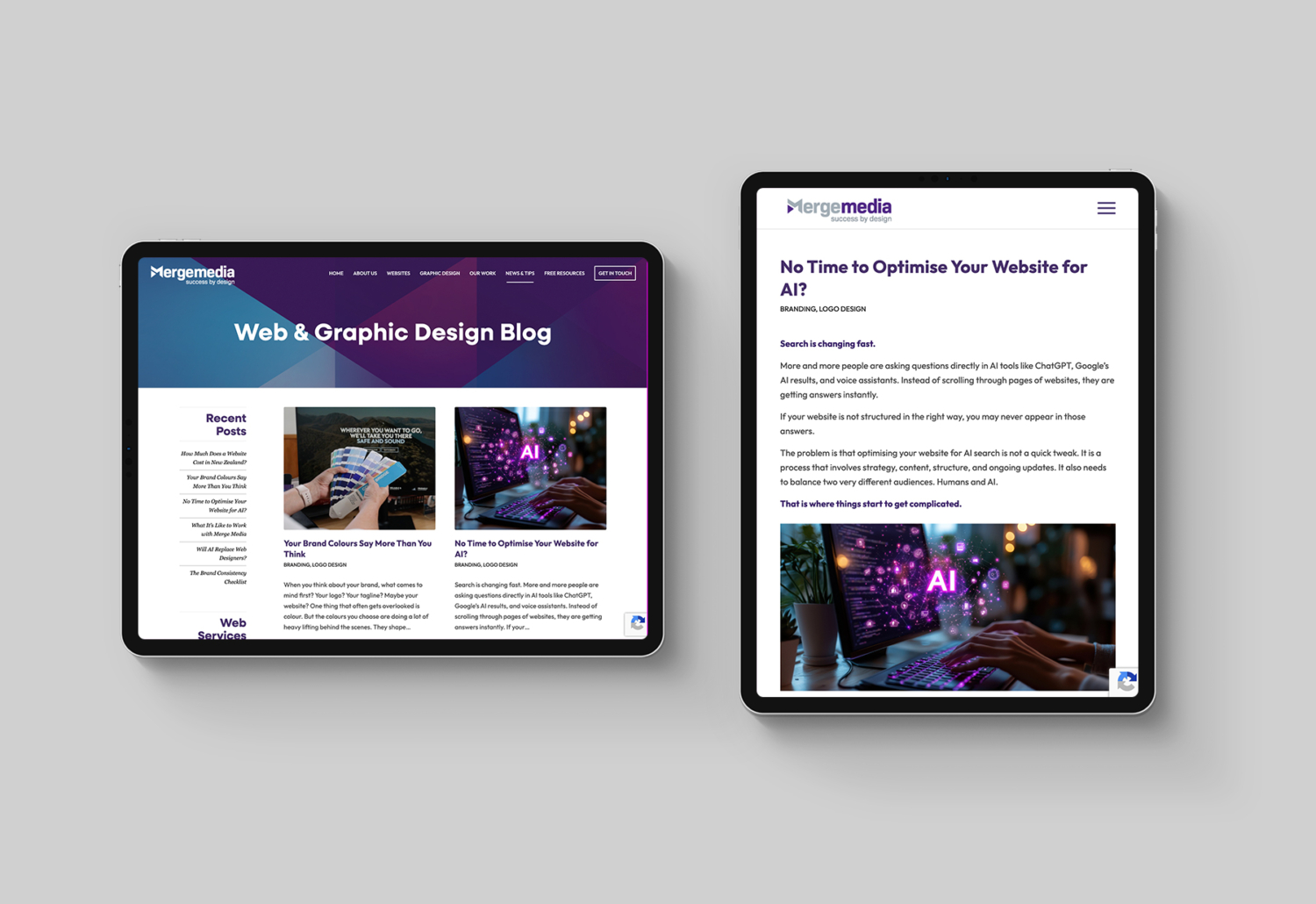
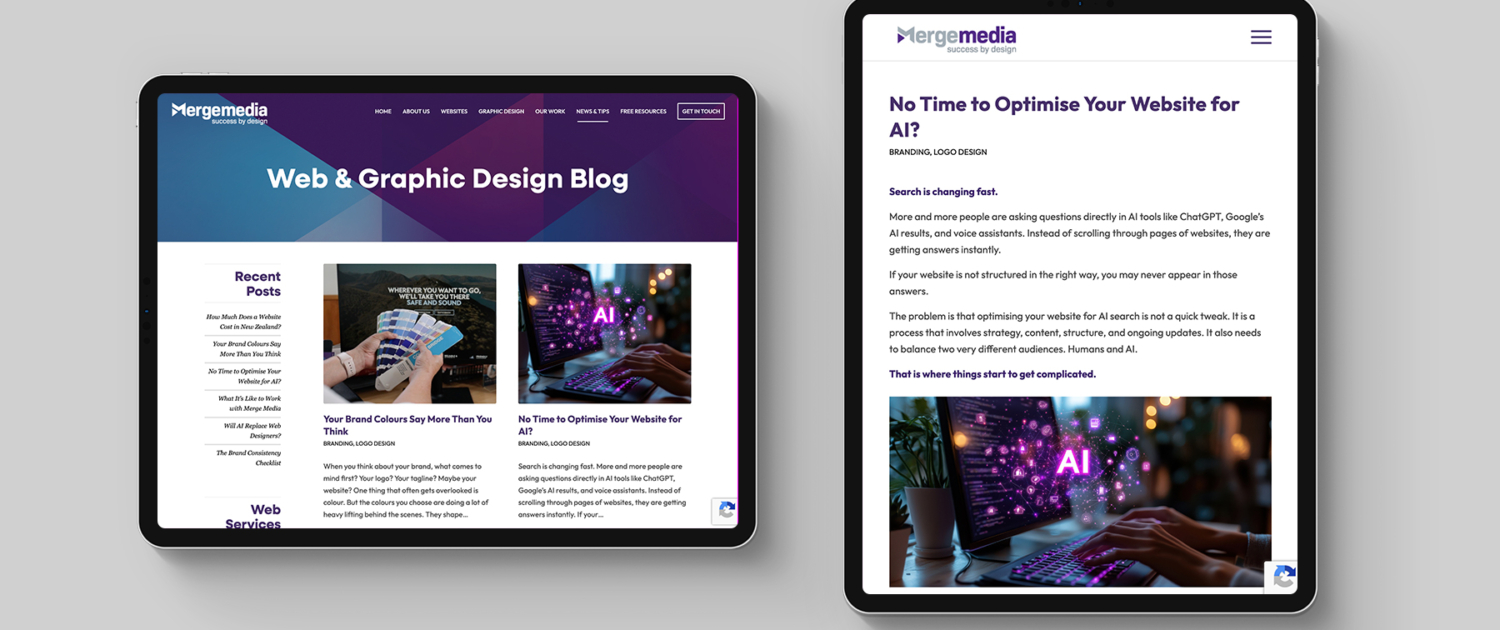
Person typing on keyboard with "ai" on the screen

Search is changing fast.

More and more people are asking questions directly in AI tools like ChatGPT, Google’s AI results, and voice assistants. Instead of scrolling through pages of websites, they are getting answers instantly.

If your website is not structured in the right way, you may never appear in those answers.

The problem is that optimising your website for AI search is not a quick tweak. It is a process that involves strategy, content, structure, and ongoing updates. It also needs to balance two very different audiences. Humans and AI.

That is where things start to get complicated.

Step One. Decide What You Actually Want to Rank For

Before you even touch your website, you need to decide what services or products you actually want to prioritise.

Many businesses try to rank for everything, which usually means they rank for nothing.

You need to start with questions like:

  • Who is your ideal customer?
  • What services or products bring the best revenue?
  • What type of work do you want more of?
  • What are people actually searching for online?

Once you know the answers to those questions, your entire website needs to be structured around them. Pages, content, blog topics, and internal links all need to support those priorities.

Without that planning stage, it is almost impossible to optimise properly for AI search.

Writing Content for Humans and AI

This is where things get tricky.

Your website content needs to do two things at the same time.

It needs to feel friendly, natural, and easy to read for real people. But it also needs to be structured in a way that AI systems can easily understand and pull answers from. That often means writing content that includes clear questions and answers, helpful explanations, and strong topical authority.

Your tone of voice also needs to stay consistent across your website so that your brand still feels approachable and human. At the same time, the content needs to demonstrate expertise so AI tools trust it as a reliable source. Getting that balance right takes a bit of thought.

Keeping Your Website Fresh and Active

AI search tools tend to favour websites that are active and regularly updated.

If your website has not changed in years, it is far less likely to be surfaced in AI generated answers. This means regularly adding new content such as blog articles, project case studies, news updates, or service pages. It also means reviewing existing pages and improving them over time. Regular updates signal to search engines that your business is active, relevant, and worth indexing again.

Without that ongoing activity, your visibility can slowly fade.

Making Your Website Easy to Navigate

Structure matters more than most people realise.

Your website needs to be easy for visitors to navigate, but it also needs to be easy for search engines and AI systems to understand. That means clear page structures, logical navigation, and strong internal linking between related pages. Call to actions also play a role here. If visitors land on your website through an AI search result, they need to quickly understand what you do and how to take the next step.

If your website is confusing or difficult to navigate, both people and AI will struggle to make sense of it.

The Technical Side Most People Never See

Behind the scenes there are also a number of technical elements that need to be aligned.

  • Page titles and meta descriptions need to clearly describe what each page is about.
  • Headings such as H1 and H2 tags need to support your key topics.
  • URLs should be simple, clear, and relevant to the page content.
  • Images should have descriptive file names and alt text.
  • Schema markup helps search engines understand your content more accurately.

Individually these details may seem small, but together they help search engines and AI systems properly interpret your website.

When everything lines up correctly, your content becomes much easier for AI search tools to surface as a trusted answer.

The Good News

Yes, optimising a website for AI search takes time. There is strategy involved, content to plan, technical elements to line up, and regular updates to keep everything relevant. It is not something you set up once and forget about.

The good news is you do not have to figure it all out yourself.

If all of this sounds like a lot, come to us and we will sort it out for you. We are constantly learning, testing, and updating our knowledge so we stay ahead of the game as search continues to evolve.

If you would like to chat about how your website is performing and what could be improved, feel free to book a free chat


Contact us

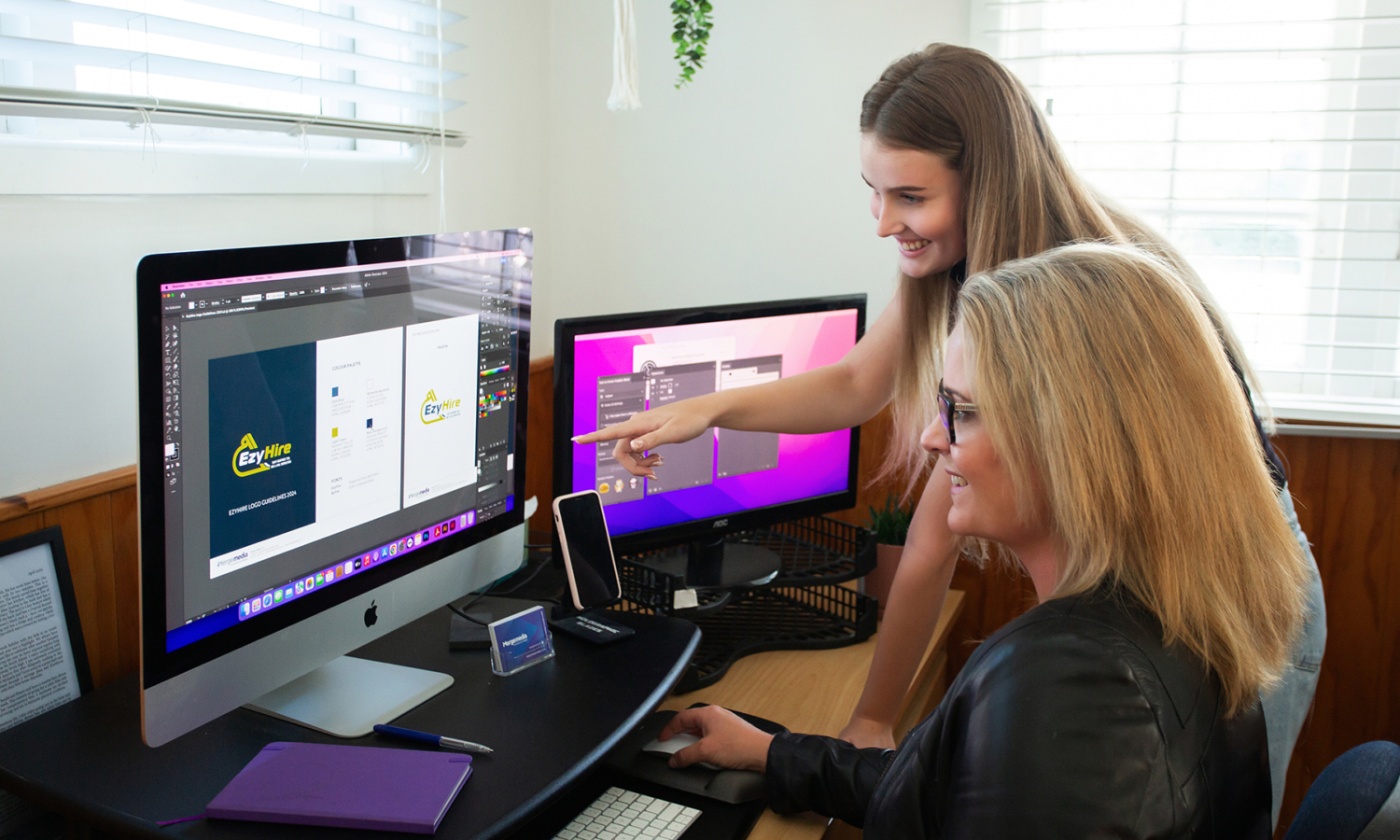
Merge Media lenaing over computers smiling while working

Choosing a web designer can feel like a bit of a gamble.

There are so many options out there and on the surface, they often sound the same. But finding someone who actually gets your business, listens to what you need, and builds a site that truly works is a different story.

But that’s exactly what we’re here to do.

We are not just another web company. We care about doing things properly, keeping the process simple, and creating websites that support your business long after they go live. Merge Media take pride in the fact that our sites are strategic, easy to manage, and designed to grow with you.

Here is what makes us different and what you can expect when you work with us.

What Makes Us Different

1. Your Website Is Built to Be Found

Before we even start designing, we do the groundwork. We look at your competitors, review your industry, and explore the keywords your customers are searching for. We build that into your site from the start so it has a better chance of ranking well in search engines.

Good SEO is not something we treat as optional. It is part of the way we build every site.

2. We’re a Small Team That Actually Cares

You are not just another job in a queue. When you work with us, you deal directly with people who care about your business. We are small, local, and personal. That means better communication, more attention to detail, and support you can count on.

3. You’re Part of the Process

We do not just go away and build something in secret. Merge Media always involves you in the journey so you know what is happening, when it is happening, and why.

We use a tool called Slickplan to lay out your website structure. That way, you can see how everything fits together before we start building. You’ll get to give feedback and see progress along the way so there are no surprises.

4. Your Website Will Grow With You

We build sites that are made to last. That means the design, structure, and platform are set up in a way that lets you grow over time without needing to start from scratch later.

If you want to manage simple updates yourself, we will show you how. And if you need help down the line, we are just a message away.

5. We Take the Time to Get It Right

Merge Media are not the fastest or the cheapest, and we are okay with that. We care about doing things properly. That means understanding your brand, your audience, and your goals before we dive into design.

It also means building something that works hard for you well after it goes live.

What to Expect When You Work With Us

Our process is straightforward and collaborative. Here’s how it usually goes:

1. Let’s have a chat

We meet either in person or online and talk about your business, your goals, and what you need your website to do. We also take a look at your current logo and brand, or chat through your ideas if you’re just starting out. That helps us put together a clear brief before anything else happens.o.

2. SEO and competitor research

We work with David, our trusted SEO specialist, who carries out a detailed competitor and keyword analysis for your business. From there, we use those insights to plan your content structure and layout using a tool called Slickplan. This helps us map out your website in a way that makes sense for your audience and gives you a chance to see how everything will fit together.

4. We get started on the build

Once you’ve approved the structure, we begin designing your new website. You’ll have the chance to review the design early on and make any changes before we dive into development. That way, we know everyone is on the same page and happy with the direction before we move forward.

5. Your site goes live

Once everything is built, tested, and approved, your site goes live through our experienced developer, Steven. We take care of the technical bits to make sure everything is running smoothly at launch.

6. You get ongoing support

After launch, we are still here. We offer dedicated hosting, maintenance, and support add-ons for clients who want extra peace of mind. But even if you are not on a plan, we will always make sure your site is up and running properly. Call us anytime — we are always happy to help.

Why This All Matters

Your website is often the first thing people see when they discover your business. It needs to represent you well, work smoothly, and help you grow.

We take pride in building websites that feel right, look sharp, and bring results. We care about doing good work for good people, and we believe your website should be something you’re proud to share.

Ready to get started? Book a Free Chat with us today and let’s talk about what your website could be.

Contact us

robotic hand typing on computer ai

AI is everywhere right now and it is changing the way people work, search and make decisions.

Articles pop up every week showing AI tools that can build full websites, write content or pull together a basic brand in minutes. A recent survey found that more than half of workers feel worried about the impact of AI on their jobs and around a third believe it may replace part of their role.

For many business owners this creates a real question. If AI can build a website, do I still need a web designer?

We have put real time into understanding this, both through Business Blueprint and our own independent research, so we feel confident sharing what we have uncovered.

Below is what business owners need to know before they decide how to approach their next website project.

robotic hand typing on computer ai

1. Why Your Website Needs More Than Pretty Pages

AI tools can generate quick design ideas and simple layouts. That part is helpful. The problem is that your website is not a collection of blocks and colours. Your website is your digital salesperson, your brand story, your positioning and your customer experience all wrapped into one place.

AI cannot sit down with you to understand your goals, your market, your competitors, your customer behaviour or your future plans. It cannot guide you through tough decisions or challenge you when something will not convert. It cannot design a consistent brand across your website, social channels, photography and printed collateral, and will almost always depend on how accurate your prompt is.

A professional designer uses AI as a tool to speed up production, but the direction, decisions and strategy come from real conversations with you and a deep understanding of your business. That is the part AI cannot replace.

2. The New Way Customers Find You

This is the biggest shift happening online right now and it affects every business, no matter your industry. People are no longer only searching on Google. They are asking questions in ChatGPT, Copilot, Perplexity and Google’s new AI summaries at the top of the page.

Recent research shows that around 70% of AI tool users prefer AI style answers over traditional search results, and more than a third say they discover new products and brands through AI chat tools. When someone types a question into an AI tool or even Google, it pulls an answer from trusted sources. If your website does not clearly answer those questions, you will not appear in that tool or Google AI Summaries.

This is where a modern web designer becomes essential. Your site needs to be structured for both humans and AI. That includes:

  • Clear Q&A style content in your blogs and service pages, as well as a dedicated FAQ page that AI can pull from
  • Straightforward headings that match the way people naturally ask questions
  • Useful, helpful explanations instead of surface level sales copy
  • Correct keywords and topics that help AI understand what you offer

If your current website is light on content or built from a basic template, AI tools may overlook you entirely. A designer who understands AI search will build a site that positions you as an expert and makes your answers easy for AI to pull.

3. The Power of Designer plus AI

AI is not here to replace designers. It is here to speed up parts of the process so the designer can focus on what matters. That means better planning, better strategy and better results for your business.

Designers who use AI well can:

  • Analyse your competitors and keywords faster
  • Produce copy and content writing faster, using keywords built for SEO
  • Repurpose your content for blogs, social media and your FAQs
  • Faster refinements and problem solving

What you get is a better website that hits the mark sooner and gives you more clarity over how your customers will find you.

The real risk is choosing a designer who ignores AI and keeps building sites the same way they did five years ago. That type of website will not perform in an AI driven search world.

What This Means Moving Forward

So will AI replace web designers?

No, not the good ones. It will replace generic DIY websites, it will replace cheap template sites that all look the same, and it will replace designs that ignore real strategy and search.

A real designer brings insight, brand thinking, customer focus and long-term planning. AI becomes part of the toolkit, not the solution on its own.

If you are investing in a new website, choose someone who understands AI, understands how people search and understands how to turn your business into an online experience that stands out. Those are the designers who will help you stay visible, relevant and competitive as AI continues to grow.

Not sure if your website is built for AI search? Get in touch and we’ll help you figure out what’s working and what’s not.


Contact us

Brand Consistency Checklist

Is Your Business Sending Mixed Signals?

Branding is more than just your logo. It is how your business shows up everywhere. That includes your website, social media, business cards, invoices, email signature and even the way you speak. If things look and feel different depending on where someone finds you, it creates confusion and uncertainty.

The truth is, inconsistent branding is costing you more than you think. It can make your business look unprofessional, water down your message and turn potential clients away before they even get in touch. But the good news is it is easy to fix once you know what to look for.

Here is a simple checklist to help you keep your brand looking sharp and consistent wherever it shows up.

1. Stop Stretching Your Logo

Your logo should be used the same way every time. That means no stretching, no weird colour changes and no swapping between random versions. Whether it is on your website, social media or print materials, your logo needs to be clear, clean and instantly recognisable.

2. Pick Your Fonts and Stick to Them

Choose one or two fonts and use them across everything. That includes your website, brochures, emails and social media graphics. Mixing different fonts creates a disjointed look and can make your business seem all over the place.

3. Your Colours Are Not a Free-for-All

Stick to the exact colours in your brand palette. Not something “close enough.” The right hex codes or print values help your brand look polished and trustworthy. Changing colours too often breaks the connection your audience builds with your brand.

4. Do You Sound Like the Same Business Everywhere?

Think about how you sound across different platforms. Do your emails sound like your social posts? Is your website copy in line with the tone of your proposals? Whether you are casual and friendly or more formal and direct, your brand voice should feel the same every time someone interacts with your business.

5. Your Photos Tell a Story

Ditch the stock photos and show real people. Friendly shots of your team on the job help build trust and make your brand feel more human. People want to see who they’re working with — so let them.

6. Check Your Socials with Fresh Eyes

Make sure your profile pictures, bios and highlights match your brand look and tone. If someone clicks from your Instagram to your website, it should feel like the same business. Keep it clear, updated and in line with everything else you are doing.

7. Your Email Signature Is Part of Your Brand Too

It is a small thing but it matters. A clean, well-branded email signature helps you look polished and professional. Use your brand fonts, colours and logo. Include your contact details and maybe a short tagline or link to your website.

8. Branded Documents Matter More Than You Think

From invoices to proposals and e-books, every piece of communication is an extension of your brand. Consistent design here shows you are professional and pays attention to detail.

9. Stop Ignoring Your Print Materials

Business cards, brochures and signage still count. If they don’t match your digital presence, it chips away at trust. Make sure print and digital are working together, not against each other.

10. Vehicle signage is your best friend

Your car or van is a rolling ad. Keep the signage clean, clear and on-brand so it grabs attention wherever you go. One job site can lead to the next if your branding shows up well.

Have you ticked all the boxes?

If you’re sitting there ticking things off, you’re already on the right track. Your brand is probably looking sharp and sending the right signals.

If you’ve missed a few, don’t panic. Most businesses do. The good news is you now know what to look out for, and small changes can make a big difference. You don’t need a full rebrand, just a little tidy-up.

And if you’re staring at this list thinking “I have no idea where to start,” we’ve got you.

Book a free chat and we’ll walk through it with you. No judgement, no jargon, and definitely no Comic Sans!


Contact us